How to Measure Key Performance Indicators (KPIs) sets the stage for a detailed exploration of a critical aspect of business success. Understanding and effectively measuring KPIs allows organizations to track progress, identify areas for improvement, and ultimately drive growth. This guide provides a structured approach to defining, collecting, measuring, and analyzing KPIs, ensuring data-driven decision-making across various departments.
From defining the specific KPIs relevant to your business objectives to implementing a robust reporting system, this guide walks you through each step. Understanding the nuances of data collection, choosing appropriate measurement methods, and establishing a clear measurement frequency will be crucial to achieving accurate and meaningful results. We will also explore the process of analyzing data for trends and patterns, enabling strategic decision-making based on concrete insights.
Defining Key Performance Indicators (KPIs)
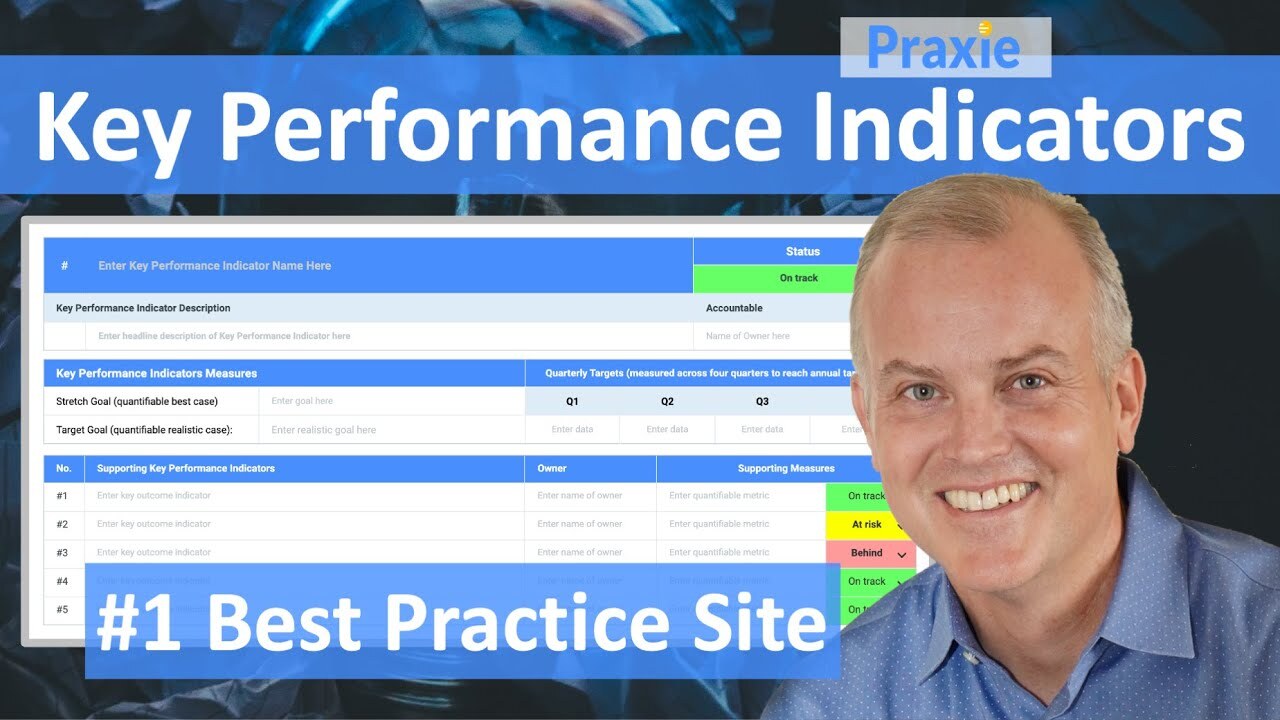
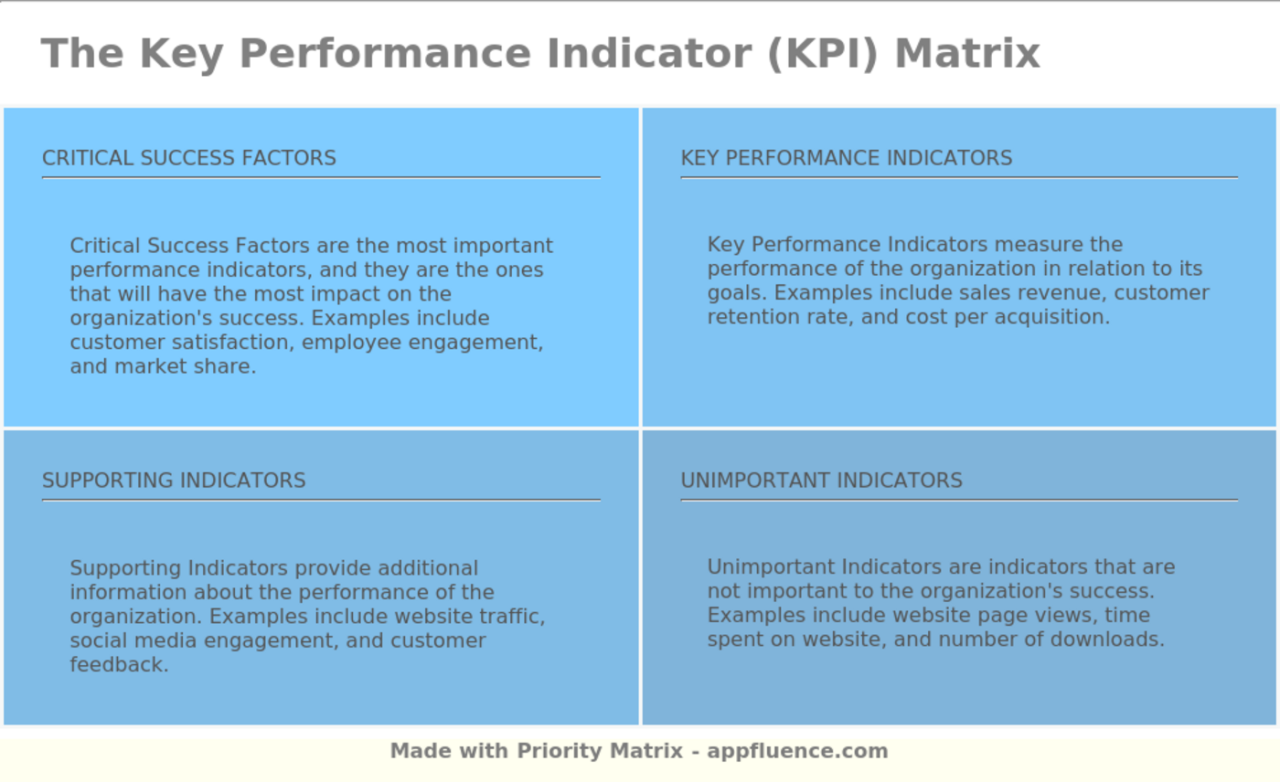
Defining Key Performance Indicators (KPIs) is crucial for businesses to track progress and make data-driven decisions. KPIs are quantifiable metrics that measure how effectively a company is achieving its objectives. Understanding various types of KPIs and their characteristics allows organizations to monitor performance across different departments and ensure alignment with strategic goals.Effective KPIs provide a clear picture of performance, enabling proactive adjustments and improvements.
They offer insights into areas of strength and weakness, fostering continuous improvement. Aligning KPIs with business objectives ensures that efforts are focused on achieving the desired outcomes.
Types of KPIs Across Industries
Understanding the diverse range of KPIs used across industries is essential for effective performance management. Different departments and industries require different metrics to assess progress and success.
- Sales KPIs: These metrics track the effectiveness of sales teams in generating revenue. Examples include revenue growth, conversion rates, average deal size, customer acquisition cost (CAC), and sales cycle length. Monitoring these KPIs allows companies to identify trends in sales performance and optimize their strategies.
- Marketing KPIs: Marketing KPIs measure the success of marketing campaigns in driving leads and customers. Examples include website traffic, click-through rates (CTRs), lead generation, social media engagement, and customer lifetime value (CLTV). These metrics help marketers assess campaign effectiveness and ROI.
- Customer Service KPIs: These KPIs evaluate the quality of customer interactions and support. Examples include customer satisfaction scores (CSAT), customer effort scores (CES), resolution time, first call resolution (FCR), and customer churn rate. Analyzing these KPIs provides insights into customer experience and helps improve support processes.
- Financial KPIs: These metrics track the financial health of the business. Examples include profit margins, return on investment (ROI), revenue per employee, and net promoter score (NPS). Monitoring these metrics helps identify financial trends and inform strategic decisions.
- Operations KPIs: These KPIs assess the efficiency of internal processes. Examples include order fulfillment time, inventory turnover rate, production efficiency, and defect rate. Monitoring these KPIs allows companies to optimize internal processes and improve productivity.
Characteristics of Effective KPIs
Effective KPIs possess specific characteristics that ensure their usefulness in performance management. These characteristics enable data-driven decision-making and ensure alignment with strategic objectives.
- Specific: KPIs should be clearly defined and unambiguous. They should leave no room for misinterpretation. For example, instead of “increase sales,” a more specific KPI would be “increase sales by 15% in the next quarter.”
- Measurable: KPIs must be quantifiable to track progress and measure success. They should be able to be measured objectively, using data and metrics.
- Achievable: KPIs should be realistic and attainable within a given timeframe. They should be challenging but not overly ambitious, to ensure motivation and commitment.
- Relevant: KPIs should directly relate to the strategic objectives of the business. They should be focused on the most critical aspects of the business and contribute to achieving strategic goals.
- Time-bound: KPIs should have a specific timeframe for measurement. This helps track progress and ensure that efforts are focused on achieving goals within a set period.
Aligning KPIs with Business Objectives
Aligning KPIs with business objectives is essential for strategic success. It ensures that all departments and teams work towards common goals, fostering a unified approach.
| Business Objective | Corresponding KPIs |
|---|---|
| Increase Sales Revenue | Revenue Growth, Conversion Rate, Average Order Value, Customer Acquisition Cost (CAC) |
| Improve Customer Satisfaction | Customer Satisfaction Score (CSAT), Customer Effort Score (CES), Resolution Time, First Call Resolution (FCR) |
| Enhance Operational Efficiency | Order Fulfillment Time, Inventory Turnover Rate, Production Efficiency, Defect Rate |
| Boost Brand Awareness | Website Traffic, Social Media Engagement, Brand Mentions, Reach |
Data Collection for KPI Measurement
Accurate and reliable KPI measurement hinges on the meticulous collection of relevant data. This process involves identifying appropriate data sources, extracting the necessary information, and then validating and cleansing the data to ensure its integrity. A robust data collection process is fundamental to the success of any KPI analysis and subsequent decision-making.
Data Sources for KPI Information
A variety of sources provide the data needed for KPI measurement. Understanding these diverse sources is crucial for creating a comprehensive and effective data collection strategy. Common sources include:
- Customer Relationship Management (CRM) Systems: CRM systems are invaluable for capturing customer interactions, purchase history, and contact details. These systems provide a detailed view of customer behavior and preferences, enabling a deeper understanding of customer satisfaction and loyalty. For example, a CRM system might track the number of support tickets opened by a specific customer segment, providing insight into potential areas for improvement in customer service.
- Website Analytics Platforms: Website analytics tools, such as Google Analytics, track user behavior on a website. They measure key metrics like page views, bounce rates, time spent on site, and conversion rates. These insights help organizations understand user engagement and optimize their website design for better performance. For instance, a high bounce rate from a specific landing page might indicate a need for improvement in content or call-to-action design.
- Sales Reports: Sales reports provide data on revenue, sales volume, and customer acquisition costs. These reports offer a crucial overview of sales performance and enable analysis of key sales trends. A sales report might reveal that a specific product line is underperforming, indicating a need for a market analysis and strategic adjustments.
- Marketing Automation Platforms: Marketing automation tools track campaign performance, including email open rates, click-through rates, and lead generation. These platforms provide detailed insights into the effectiveness of marketing campaigns and enable targeted adjustments for optimal results. For instance, an email campaign with low open rates may indicate a need to improve subject lines or segment recipients more effectively.
Data Extraction and Transformation
Effective data extraction and transformation processes are essential for converting raw data from various sources into a usable format for KPI analysis. This involves extracting relevant data points, cleaning them, and preparing them for analysis.
- Extraction Methods: Data extraction methods vary depending on the source. For example, extracting data from a CRM system might involve using application programming interfaces (APIs), while extracting data from a spreadsheet might involve using scripting languages like Python.
- Transformation Methods: Transformation involves converting the extracted data into a consistent format. This may include data cleaning, standardizing units, and aggregating data to create meaningful summaries. Common transformations include merging data from multiple sources and creating calculated metrics. For example, combining data from sales reports and marketing automation platforms can provide a comprehensive view of customer behavior and purchasing decisions.
Data Validation and Cleansing
Data validation and cleansing are critical steps to ensure data accuracy and reliability. Inaccurate data can lead to flawed analyses and potentially poor decisions.
- Validation Rules: Establish specific validation rules to ensure data integrity. These rules might check for missing values, incorrect data types, or inconsistencies. For instance, a rule could check that customer ages are within a realistic range. Another rule could ensure that sales figures are positive.
- Cleansing Procedures: Cleansing procedures address data inconsistencies and errors. This may include handling missing values, correcting errors, and removing duplicates. For example, if a customer’s address is incomplete, the cleansing process might fill in missing details using a lookup table or automated data enrichment.
Data Collection Process Flowchart
The following flowchart illustrates the data collection process, from initial identification to final reporting:[A detailed flowchart, not in HTML, would visually represent the steps:
- KPI Identification
- Data Source Selection
- Data Extraction
- Data Transformation
- Data Validation & Cleansing
- Data Loading
- KPI Calculation
- Reporting]
Choosing Measurement Methods
Selecting appropriate methods for measuring Key Performance Indicators (KPIs) is crucial for accurate interpretation and effective decision-making. This involves understanding the nuances of various measurement techniques and tailoring them to the specific KPI being assessed. Different KPIs require different approaches, ensuring that the chosen method aligns with the nature of the data being collected and the desired insights.Effective KPI measurement goes beyond simply collecting data; it encompasses selecting the most suitable method to derive meaningful conclusions.
Averages, percentages, and ratios, for instance, offer distinct perspectives, and the choice between them hinges on the specific KPI and the information needed.
Comparison of Measurement Methods
Various methods are available for measuring KPIs, each with its strengths and weaknesses. Averages provide a central tendency, percentages highlight proportions, and ratios reveal relationships between different variables. Choosing the right method ensures accurate representation of performance. For example, an average customer satisfaction score provides a general idea of satisfaction levels, while a percentage of returning customers indicates the loyalty rate.
Ratios, such as the customer acquisition cost to customer lifetime value, provide insight into the profitability of customer acquisition strategies.
Appropriate Metrics for KPI Types
The selection of metrics should be tailored to the specific KPI type. Customer satisfaction, for instance, might be measured using a Likert scale, a rating system where respondents indicate their level of agreement or disagreement with a statement. Website traffic, on the other hand, might be measured using counts, unique visitors, or page views.
Examples of Measurement Scales
Different measurement scales offer various levels of detail. A Likert scale, commonly used for customer satisfaction surveys, employs a range of options to gauge attitudes and opinions. A nominal scale, used for categorizing data, might classify website visitors by their location or demographics. The choice of scale depends on the nature of the KPI and the desired level of granularity.
Summary Table of KPI Types and Measurement Methods
| KPI Type | Measurement Method | Example | Scale Type |
|---|---|---|---|
| Customer Satisfaction | Average rating on a Likert scale (e.g., 1-5) | Average customer rating of 4.2 on a 5-point scale | Ordinal |
| Website Traffic | Unique visitors per day | 10,000 unique visitors daily | Ratio |
| Conversion Rate | Percentage of visitors who complete a desired action (e.g., purchase) | 15% conversion rate | Ratio |
| Customer Retention Rate | Percentage of customers who remain loyal over a specific period | 80% retention rate | Ratio |
| Sales Revenue | Total revenue generated over a period | $100,000 in revenue | Ratio |
Establishing Measurement Frequency
Regular monitoring of Key Performance Indicators (KPIs) is crucial for informed decision-making and strategic adjustments within an organization. Consistent measurement allows for the tracking of progress, identification of trends, and the proactive management of potential issues. Without a defined measurement schedule, valuable insights may be missed, leading to inefficiencies and suboptimal performance.Effective KPI measurement hinges on a well-defined frequency.
This frequency should align with the nature of the KPI and the specific needs of the organization. By understanding the impact of measurement frequency on data analysis, businesses can optimize their monitoring strategies for maximum efficiency and impact. This approach will provide actionable insights for improvements.
Importance of Regular KPI Monitoring
Regular KPI monitoring provides a clear picture of an organization’s performance. It enables businesses to identify areas of strength and weakness, facilitating proactive adjustments to strategies and operations. Regular monitoring fosters a culture of data-driven decision-making, leading to improved efficiency and better resource allocation. The process ensures that the organization is consistently aligned with its objectives.
Recommended Intervals for Measuring KPIs
The ideal measurement interval for KPIs depends heavily on the nature of the KPI itself. For example, daily or weekly intervals are suitable for KPIs related to operational efficiency, such as order fulfillment rates or customer support response times. Monthly intervals might be more appropriate for KPIs reflecting broader strategic performance, like market share or revenue growth.
Impact of Measurement Frequency on Data Analysis
The frequency of measurement directly impacts the depth and breadth of data analysis. Frequent measurements provide a granular view of performance fluctuations, allowing for the identification of short-term trends and potential issues. Less frequent measurements, on the other hand, offer a broader perspective but may not capture rapid changes or immediate responses to interventions. A well-considered frequency ensures that the analysis is robust enough to support decision-making.
Measurement Schedule for Different Departments
A structured schedule for KPI measurement is essential for consistency and efficiency. This table Artikels recommended frequencies for different departments, considering the specific nature of their KPIs:
| Department | KPI | Measurement Frequency |
|---|---|---|
| Sales | Sales revenue, conversion rates, customer acquisition cost | Weekly/Monthly |
| Marketing | Website traffic, social media engagement, lead generation | Weekly/Monthly |
| Customer Support | Average resolution time, customer satisfaction scores | Daily/Weekly |
| Operations | Order fulfillment time, inventory turnover rate | Daily/Weekly |
| Finance | Cash flow, revenue, expense | Monthly/Quarterly |
This table provides a general guideline; specific departments may need to adjust frequencies based on their unique circumstances.
Implementing a Reporting System
A robust reporting system is crucial for effectively monitoring and managing key performance indicators (KPIs). It allows for timely identification of trends, performance gaps, and areas needing improvement. This system acts as a central hub for all KPI data, providing a clear overview of the organization’s performance across various departments or functions.A well-structured reporting system empowers stakeholders with actionable insights, facilitating data-driven decision-making.
This translates into better resource allocation, optimized processes, and ultimately, enhanced organizational performance.
Structure of a Comprehensive KPI Reporting System
A comprehensive KPI reporting system should be designed with a clear structure, ensuring easy access and interpretation of data. This structure should encompass different levels of detail, allowing for both high-level summaries and deep dives into specific metrics. Key components of such a system include a central repository for all KPI data, standardized reporting templates, and defined roles and responsibilities for data collection, analysis, and reporting.
Presenting KPI Data Clearly and Concisely
Clear and concise presentation of KPI data is paramount for effective communication and interpretation. Avoid overwhelming stakeholders with excessive data points or complex visualizations. Instead, focus on presenting the most critical information in a digestible format. Use clear and consistent labeling for all data points, ensuring easy understanding of the metrics being presented.
Importance of Visualizations
Visualizations, such as charts and graphs, significantly enhance the understanding and interpretation of KPI data. Visual representations allow for quick identification of trends, patterns, and anomalies. They also help in highlighting key performance insights that might be missed in tabular data alone. Visualizations facilitate a deeper understanding of the data and provide a more engaging and accessible presentation of the insights.
Sample KPI Dashboard
A sample KPI dashboard could include several visual representations, such as:
- Overall Performance Summary: A high-level overview of key metrics, such as total revenue, customer acquisition cost, and customer lifetime value. This summary would utilize a combination of bar charts and line graphs to visually represent trends over time. For example, a line graph showing the monthly revenue growth, accompanied by a bar chart comparing this year’s revenue to last year’s, will provide a quick overview of financial performance.
The data presented in these visualizations should be readily comparable and easily digestible.
- Sales Performance: A breakdown of sales performance by region or product category. This section might include a geographical map highlighting sales performance in various regions, alongside a stacked bar chart showcasing sales distribution across different product lines. The map would visually indicate regions exceeding or falling short of targets, while the bar chart would offer a clear view of product line performance.
- Customer Satisfaction: A visualization of customer satisfaction scores over time, possibly using a line graph illustrating the trend of customer satisfaction scores and a pie chart representing the distribution of satisfaction ratings (e.g., Excellent, Good, Fair). The visualizations should highlight areas needing improvement or positive trends, providing actionable insights for customer relationship management.
- Operational Efficiency: Charts depicting key operational metrics, such as order fulfillment time and customer support response time. A line graph illustrating order fulfillment time over a period of time, and a scatter plot showing the correlation between customer support response time and customer satisfaction would help in understanding the relationship between these two metrics.
Analyzing KPI Data

Effective KPI analysis is crucial for understanding performance trends, identifying areas for improvement, and making data-driven decisions. By systematically analyzing KPI data, organizations can gain valuable insights into their operations and optimize strategies for better outcomes. This involves more than just looking at numbers; it necessitates a deep understanding of the context and potential implications of the data.Analyzing KPI data is a multifaceted process that goes beyond simple observation.
It requires a structured approach to identify patterns, compare performance against targets and benchmarks, and pinpoint areas needing improvement. This process involves the careful consideration of both quantitative and qualitative aspects of the data, leading to a more comprehensive understanding of the factors influencing performance.
Identifying Trends and Patterns
To effectively identify trends and patterns in KPI data, it’s essential to visualize the data over time. Graphical representations, such as line graphs, bar charts, and trend lines, are invaluable tools for visualizing patterns and identifying potential anomalies. Careful scrutiny of these visualizations can reveal upward or downward trends, seasonal variations, and other patterns that might not be immediately apparent from a table of raw data.
For example, a steady decline in customer satisfaction scores over several months could signal a need for improvement in customer service protocols.
Comparing Performance Against Targets and Benchmarks
Comparing KPI performance against predetermined targets and industry benchmarks provides valuable context for interpreting the data. This comparison highlights areas where performance exceeds expectations and areas that require improvement. For example, if a company’s sales figures consistently fall below its quarterly targets, the analysis should investigate the underlying reasons. Benchmarking against industry competitors helps to identify best practices and areas where the company can learn and improve its performance.
Identifying Areas Needing Improvement
Identifying areas needing improvement is a crucial step in the KPI analysis process. By analyzing deviations from targets, comparing performance to benchmarks, and considering external factors, organizations can pinpoint specific areas that require attention. For example, if customer acquisition costs are significantly higher than industry benchmarks, the company should investigate the effectiveness of its marketing campaigns and identify opportunities to reduce costs.
Analyzing the data should lead to specific and actionable recommendations.
Common KPI Trends and Potential Implications
| KPI Trend | Potential Implications |
|---|---|
| Steady increase in customer churn rate | Potential issues with customer service, product quality, or pricing strategy. Requires investigation into root causes and development of corrective actions. |
| Significant decrease in website traffic | Possible issues with website usability, , or marketing campaigns. A detailed analysis of website analytics is needed to understand the problem and implement solutions. |
| Consistent exceeding of sales targets | Strong performance across various areas, which could be attributed to effective marketing, sales, or product development strategies. |
| Increasing operational costs without corresponding increase in output | Potential inefficiencies in operations or resource allocation. A review of processes and resource utilization is required. |
Using KPI Data for Decision-Making
Effective business decisions rely heavily on insightful analysis of key performance indicators (KPIs). By understanding trends and patterns in KPI data, organizations can identify areas for improvement, capitalize on opportunities, and ultimately achieve strategic goals. This process transforms raw data into actionable intelligence, driving positive change across various departments and functions.Strategic decisions are often informed by the consistent monitoring and analysis of KPI trends.
Data visualization tools and dashboards can present this information in a clear and concise manner, allowing stakeholders to easily grasp the performance status of key initiatives and make well-informed choices. This proactive approach to data analysis empowers organizations to adapt to changing market conditions and customer demands.
Using KPIs for Strategic Decisions
KPI data provides a crucial lens through which to view strategic objectives. Analyzing trends in sales, customer acquisition, or operational efficiency reveals opportunities and risks, enabling proactive adjustments to strategies. For instance, a declining customer satisfaction score might signal the need to revamp customer service protocols, while a sudden surge in website traffic might indicate the effectiveness of a new marketing campaign.
Identifying Growth and Efficiency Opportunities
KPIs serve as a valuable tool for identifying potential growth and efficiency improvements. By examining performance metrics, businesses can pinpoint areas where processes can be streamlined, resources allocated more effectively, or new opportunities explored. For example, analyzing website traffic data can reveal underperforming pages or ineffective calls to action, leading to improvements in conversion rates. Similarly, monitoring production output KPIs can highlight bottlenecks and inefficiencies in the manufacturing process.
Developing Action Plans Based on KPI Analysis
Developing action plans based on KPI analysis is a critical step in translating insights into tangible results. A thorough review of the data, coupled with a clear understanding of the organization’s goals, should inform the creation of well-defined action plans. These plans should Artikel specific steps, timelines, and responsible parties, ensuring accountability and effective implementation. A documented action plan also facilitates tracking progress and measuring the impact of the implemented changes.
Case Study: Enhanced Customer Retention
A retail company noticed a decline in customer retention rates over several quarters. Analyzing customer journey KPIs, including website bounce rates, abandoned cart rates, and customer service response times, revealed a recurring pattern. Customers were experiencing difficulties navigating the website and found the customer service response times unsatisfactory. The company implemented a new website design focusing on improved navigation and user experience.
Simultaneously, they invested in training customer service representatives to improve response times and problem-solving skills. These actions resulted in a significant improvement in customer retention rates, with a 15% increase within six months. This example demonstrates how analyzing KPI data can pinpoint specific areas needing improvement, leading to targeted interventions and positive outcomes.
Last Recap
In conclusion, this guide has provided a comprehensive overview of how to measure Key Performance Indicators (KPIs). By following the steps Artikeld, organizations can establish a system for tracking progress, identifying areas for improvement, and making data-driven decisions. Ultimately, implementing a robust KPI framework empowers businesses to optimize performance, achieve strategic goals, and ensure long-term success.